

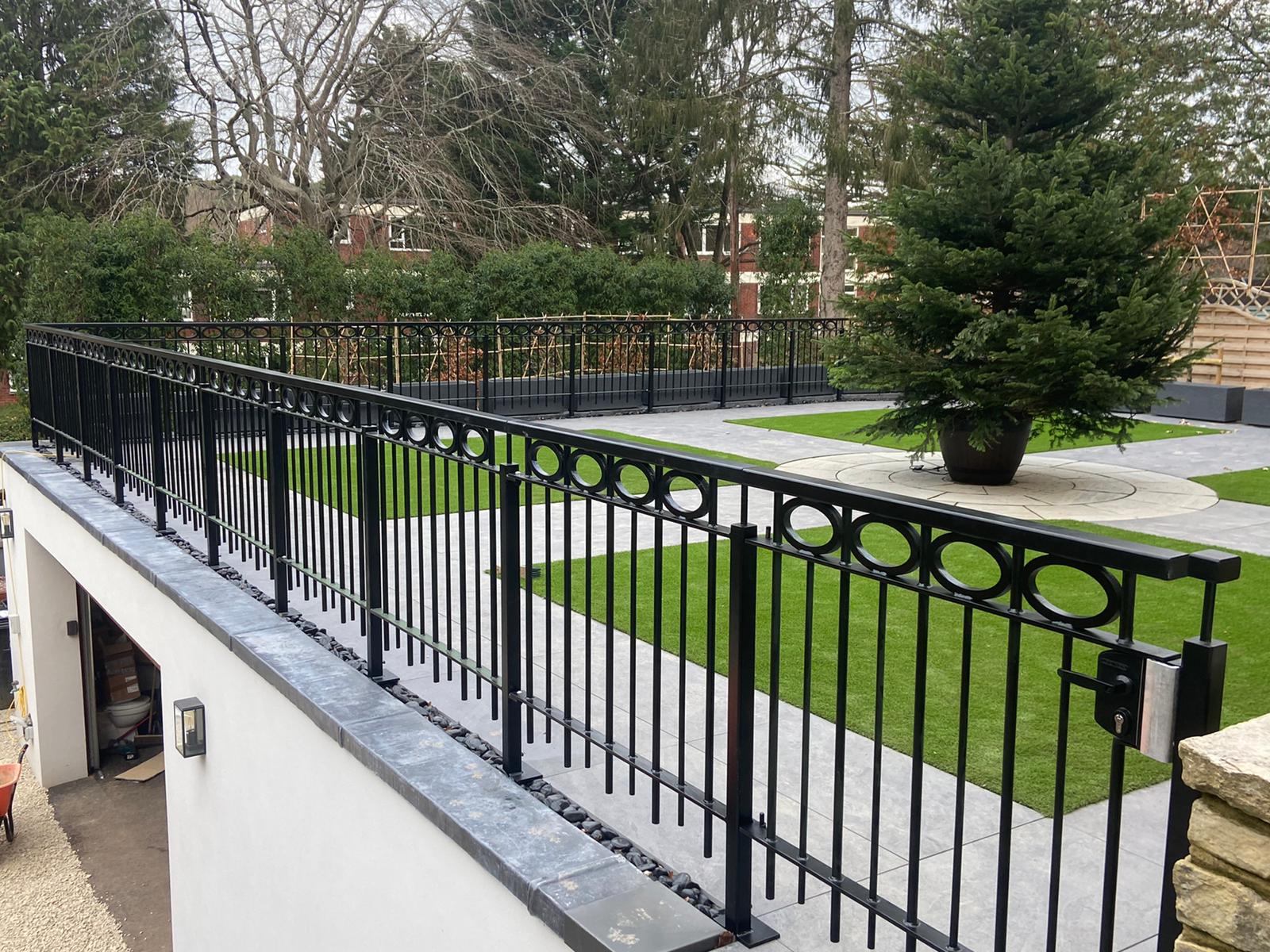
For most outdoor steelwork, mild steel protected by hot-dip galvanising, often with a powder-coated finish on top, is the usual choice; near the coast, add stainless steel fixings and hardware, and consider stainless steel where corrosion resistance or appearance matters most. TL Steelworks chooses material and protective coating for the environment and intended use rather than appearance alone.
By the TL Steelworks Technical Team, structural steelwork and bespoke metal fabrication specialists working from our 15,000 sq ft facility in Verwood, Dorset.
Why does outdoor and coastal exposure change the choice of steel and finish?
Outdoor steel is exposed to moisture, rainfall and changing weather, and coastal steel also faces salt-laden air, all of which accelerate corrosion on unprotected metalwork. Many areas across Dorset, including Poole, Bournemouth and Christchurch, experience these coastal conditions, so the material and coating need to be decided at the design stage rather than after the steel is made.
Corrosion does not only spoil the look of a gate, balcony or staircase. It can develop around welds, at fixings and at joints, and it reduces both the appearance and the service life of fabricated steel. Choosing the wrong material or finish at the beginning of a project can significantly increase maintenance costs later, which is why we treat finish selection as part of the specification, alongside dimensions and connection details.
Which steel should I use for outdoor work?
The most suitable material depends on the application. Mild steel with appropriate protective coatings, stainless steel and aluminium are all commonly used for external projects, and each suits different jobs.
| Material | Typical use | What to know outdoors |
|---|---|---|
| Mild steel | Structural steelwork, beams, frames, staircases, gates and railings | Strong, versatile and cost-effective, but it needs a protective coating such as galvanising, primer or powder coating when used outside. |
| Galvanised steel | External structures, gates, railings and balconies | Mild steel given a zinc coating by hot-dip galvanising for added corrosion protection against moisture and weather. |
| Stainless steel | Architectural features, fixings, hardware and balustrade fittings | Chosen where corrosion resistance, hygiene or a high-quality appearance is particularly important; marine-grade fittings are used on coastal glass balustrades. |
| Aluminium | Components where weight matters | A lightweight option often chosen where reduced weight and natural corrosion resistance are important. |
For load-bearing work such as beams and structural frames, the steel is specified by the structural engineer’s calculations. Our in-house engineer can produce the structural design and calculations to support Building Control requirements, and the finish is then chosen to suit where that steel will sit.
What finish should I use for outdoor or coastal steel?
For external steel, the main protective finishes are hot-dip galvanising, powder coating and specialist protective primers, used alone or together depending on the exposure and the look you want. Near the coast, the finishing system matters more because salt air speeds up corrosion on any weak point.
- Hot-dip galvanising – a zinc coating that protects steel from corrosion and is widely recommended for steel gates and railings in coastal locations.
- Powder coating – a durable, coloured decorative finish that adds another layer of weather protection.
- Specialist protective primers – used to protect steel where a primed and painted system is specified.
- Stainless steel fixings and hardware – hinges, bolts and fixings in stainless steel offer improved resistance to corrosion, particularly near the coast.
Galvanising and powder coating can be used together, combining the zinc protection with a coloured finish that suits the property.
Does internal steel need the same finish as external steel?
No. Internal and external steelwork face very different conditions, so the finish is chosen for the environment and intended use. That is why one of the first things we establish in every project brief is whether the component is for internal or external use, whether it is structural, decorative or safety-related, and the finish required.
Steel beams and RSJs are fabricated to the engineer’s specification and finished in our own painting facilities where a protective coating is specified. External staircases, balconies, gates and railings exposed to the weather will normally need a more robust protective system than steel enclosed within a building.
How do I choose the right steel and finish for my project?
Start with where the steel will be and what it has to do, then match the material and coating to that. The questions we work through with every customer are:
- Is the steel internal or external, and how exposed is it to rain, moisture and salt air?
- Is it structural, decorative or safety-related, such as a balustrade or railing?
- What appearance and colour do you want the finished piece to have?
- Which fixings, hinges and hardware will be exposed, and should they be stainless steel?
- How easy will it be to inspect and maintain once it is installed?
Our engineers and draughtsmen record the material specification on the 2D and 3D fabrication drawings, produced in Tekla Structures and Advance Steel, and you approve those drawings before manufacturing begins.
Why does it help when painting is done in-house?
Our 15,000 sq ft Verwood facility has purpose-built fabrication workshops and painting facilities under one roof, so the steel is fabricated and finished by the same team. In-house painting is part of quality control rather than an upsell: the coating is specified for the environment and intended use, and fabrication and finishing are planned together.
Because design, engineering, fabrication and finishing sit with one team, you are not coordinating separate suppliers for the steel and the coating. We can also plan delivery, staggered to suit your build programme where needed, and installation, including lifting with our spider crane.
What do coastal property owners in Dorset ask most?
Coastal property owners need steelwork with suitable material and coating specification for a marine environment. We work across Dorset, Hampshire and the wider south of England from our base in Verwood, including coastal areas such as Poole, Bournemouth and Christchurch, and the specification is set for each site rather than taken from a standard list.
Read more about how finishes affect gates and railings in Poole’s coastal environment, see the finishes available for architectural metalwork, or look at our steel fabrication services and structural steelwork services.
Frequently asked questions
Are galvanised gates suitable for coastal properties?
Yes. Hot-dip galvanising offers strong protection against corrosion and is widely recommended for steel gates and railings installed in coastal locations such as Poole. Adding a powder-coated finish over the galvanising gives a coloured finish and another layer of protection.
Is galvanising necessary for fabricated steel?
For many outdoor projects in Dorset, galvanising provides valuable corrosion protection, particularly in coastal environments where steel is exposed to moisture and salt. Steel used inside a building may need a different finish, chosen for its environment and use.
Should fixings be stainless steel near the coast?
Where appropriate, yes. Stainless steel hinges, bolts and fixings offer improved resistance to corrosion, particularly near the coast, and marine-grade stainless steel fittings are used for glass balustrades on coastal properties.
Can I choose the colour of my steelwork?
Yes. Powder coating provides a durable coloured finish, so gates, railings, balconies and staircases can be finished to suit the property while adding weather protection.
Does outdoor steel still need maintenance?
Yes. Protective finishes improve durability and reduce maintenance, but external steel and fittings should still be inspected periodically, particularly on coastal properties where exposure to salt air is greater.
How much does a protective finish cost?
Every steel fabrication project is priced around its specific design, materials, engineering and installation requirements, and protective finishes are part of that. Share your drawings or project details to receive a tailored quotation.
Talk to TL Steelworks about your outdoor or coastal steelwork
If you are planning external steelwork, tell us where it will be installed and what it needs to do, and we will specify a material and finish to suit. Call TL Steelworks on 01202 285449 or 07938 826490, or send your drawings, dimensions and project details through our contact page. We are at Unit 2, Bessemer Close, Ebblake Industrial Estate, Verwood, Dorset BH31 6AZ.

